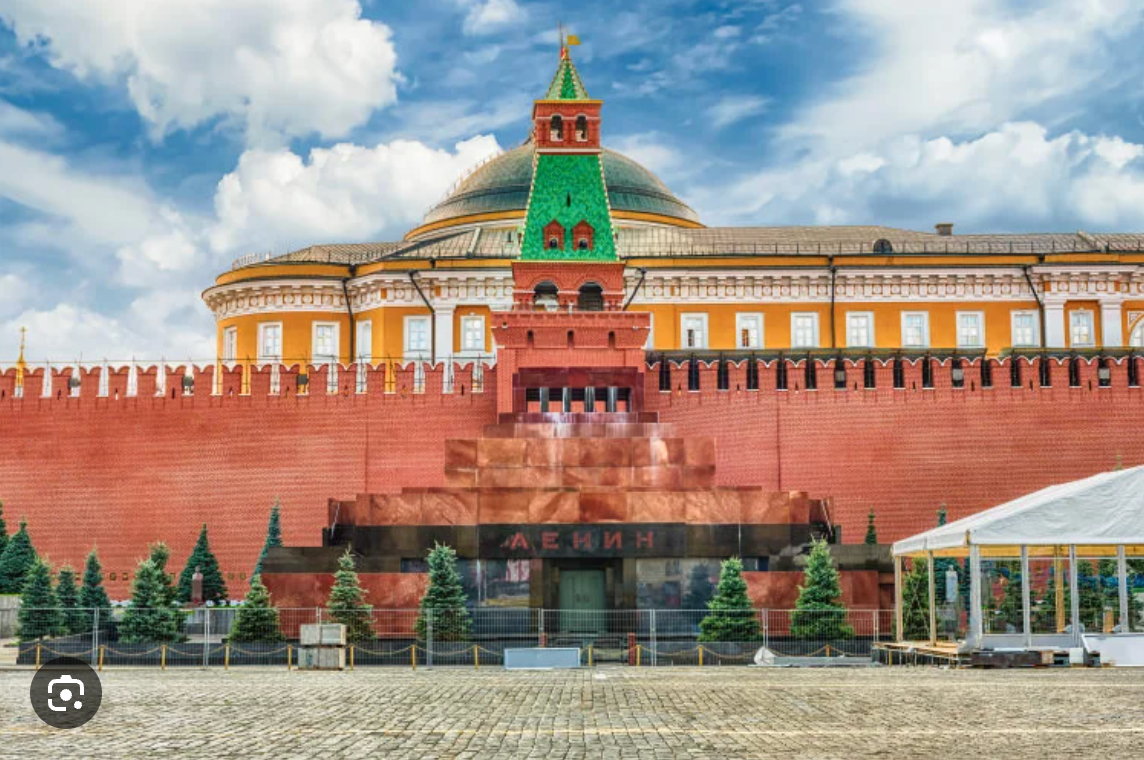
My First Cross-Cultural Experience
By Lisa DeWaard, Ph.D.


It was a beautiful August day in 1991. The skies were a brilliant blue with only the occasional puff of cloud overhead. The sun was shining, making the day warm but not hot. There was a light, fresh breeze. I was standing in a long line taking in my surroundings. I was on a large square made up of gray cobblestones which had turned out to be somewhat smaller than I had anticipated, although I’m not sure why. The square was ringed by a number of disparate structures. I slowly pivoted, taking in each building in turn. Behind me was an enormous structure made of deep red brick. It had eight sharply pointed towers each of which was topped with a gold star and, at the base of each tower, there were triangular architectural details similar to the crimping around a pie. They alternated red and white. The windows had white scalloped trimmings. I had never seen anything like it in person; it seemed to me to come straight out of a fairy tale.
To its right was a small, very ornate church in tones of red, green, white, and gold. The long panels on its walls were scalloped at the top, driving your gaze upward to its gleaming gold cupolas. But the building I couldn’t take my eyes off of was directly in front of me. A magnificent cathedral stood up tall from the cobblestones. Atop a low base stood nine towers, each with a cupola. Each cupola had a different design. Some had swirls of alternating colors, others were studded with triangles, and one looked as though a soft white onion was trying to come through a deep green net. The paint was faded and peeling, but that took nothing away from its impact. I was astounded by the sight of it and couldn’t believe I was actually there. There I was, a 16-year old Cold War kid from the U.S., standing on Red Square in Moscow and gazing up at the brilliant onion domes of St. Basil’s Cathedral.
Months before, during my junior year of high school, I was sitting in homeroom listening to the daily announcements over the intercom. It was the regular start to a regular day. After a couple of standard announcements, I suddenly heard something that grabbed my attention: There was an opportunity for interested students to apply to visit the Soviet Union in the summer. Applications and additional information were available at the guidance counselor’s office. My interest was piqued: my generation had been raised believing the Soviet Union was our enemy. I grew up terrified at the thought of nuclear war. I’d never been out of the country and neither had my parents, and it never crossed my mind that I might visit the U.S.S.R. one day. And suddenly there was an opportunity for me to go. All my thoughts and fears evaporated at the exciting thought of actually traveling there. I had to go.
Within hours I had visited the guidance counselor, picked up the information and application, and was reading through it during my next class. The opportunity was through the People-to-People Student Ambassador Program, a joint effort by the U.S. and Soviet governments. It provided students of each country the chance to visit the other. I went home and shared the information with my parents, who at first said there was no way they would let me go. It was absolutely out of the question. I talked them into letting me apply. When I was accepted, I talked them into letting me see if I could raise the funds for the trip. After months of talking them into one step at a time, on July 9, 1991, I was on a plane from New York City to Helsinki, Finland, with 23 other rising seniors and our chaperones from my home state of Alabama. Our 24-day itinerary took us from there to Tallinn and Narva in Estonia and then to Leningrad, Russia. After a couple of days there, we headed by plane to Alma-Ata, Kazakhstan and then on to Irkutsk, Russia, to see Lake Baikal. Next we went to Tashkent, Uzbekistan. Our last stop was Moscow. From there, we would fly to Stockholm, spend the night, and head home.
After almost three weeks of jumping time zones every couple of days, we were exhausted and tired, but were finally in Moscow. Now we were staring at St. Basil’s from our places in a double file line that stretched from Lenin’s Tomb all the way down the square. From there it turned left and continued along the front of the Palace of Facets. It went back so far that we couldn’t see its end. The people standing in line were solemn and almost silent. We were the only ones being loud. Our group leaders had arranged for us to cut in line about 50 meters back from the mausoleum’s entrance to reduce our wait and keep us on schedule. I remember feeling acute embarrassment that we were cutting in line in front of all of the other people; it wasn’t fair at all. But these kinds of arrangements were common for tour groups and no one protested.
We were heading to the tomb to see the preserved body of Vladimir Lenin, who died in 1924 and was embalmed shortly thereafter – despite the strong protestations of his wife. The idea of seeing a body that had been embalmed for 67 years was unsettling at best, but we were also very curious about it. While we were in line, our leaders briefed us on what to expect and gave us instructions on how to behave. They explained the layout of the interior of the building—the stairs and the turns we would take going through—and told us that we were to walk through the building without stopping. We needed to keep our hands at our sides and not speak — in fact, we shouldn’t make any noise at all. And photos were absolutely, unequivocally forbidden. Visiting Lenin’s tomb was a pilgrimage experience for many Soviet people, they explained, so it was necessary to follow these rules to be respectful. And there were serious consequences if we broke them. The soldiers who guard the tomb are specially selected for the task and it is a great honor for them – the equivalent of being chosen to guard the Tomb of the Unknown Soldier in the U.S. Each would be armed with a long rifle that had a bayonet at the top. If we were loud, stopped walking, or did anything other than file silently and respectfully past the display, they would be within their rights to grab us, throw us up against the wall, and threaten us with their bayonets. I was stunned to hear that, and I wasn’t the only one. They could throw kids up against a wall? They could threaten us with bayonets? Wow! That was even more strange than the thought of visiting a mausoleum. The thought that there could be such striking consequences for bad behavior etched itself into my mind. I remember that moment—and my subsequent walk through the tomb—in vivid detail. We were all extremely well-behaved and followed the instructions to the letter. That knowledge, though, was a greater culture shock than seeing Lenin himself. Looking back, I know now that it was the first time I fully realized how different one culture could be from another. It hit me that there was more to culture than the different foods, clothing, and faces we had seen on the trip so far.
We had all noticed a wide range of cultural differences on that trip. There are many photos in my scrapbook of weird toilets, strange foods, and unexpected behaviors – why were Soviets so serious on the streets? No one was smiling! I didn’t realize it back then, but the strict rules for Lenin’s Tomb kindled within me a need to understand why. I expected the obvious things to be different: the people would look and sound different, homes would be different, food would be different, but not this. This spoke of something much more profound in how differently we viewed and experienced our world. It made me extremely curious. I would later realize that those rules reflected a difference in the depth of respect and reverence each country has for its leaders. While we value our leaders in the U.S., we do not revere them. It was clearly evident that those in line felt a profound respect and reverence for the man who had shaped the culture of the U.S.S.R. for the last 75 years—and for their leaders in general—far greater than what we feel for our own. Why else would people be willing to wait in line a full day for a 30-second glimpse of someone long passed?
Thinking back, I sometimes wonder whether our chaperones were simply trying to scare us just enough to make sure we behaved well in Lenin’s Tomb, or if what they said was true. None of us dared to ask or question them, since they were in charge and we were 16 years old. I still don’t know whether it’s true or not. But I do know that that moment quite literally changed my life. It instilled in me a desire to know why. Why are we alike in some ways and not others? My future would be tied to Russia and her people from that moment onward:
- Three weeks after our return, I was sitting in the living room putting my photos in my scrapbook when I saw the Russian White House ablaze on the news. The Soviet Union had ended.
- In 1994, I would be on a plane headed to St. Petersburg to begin my junior year abroad at the St. Petersburg State University.
- In 2001, I would begin a doctoral program in Second Language Acquisition with a focus on whether second language learners of Russian acquired cultural features in language and if so, how.
- In 2013, while preparing an article for publication, I would discover the Six Dimensions of National Culture Model by Prof. Geert Hofstede.
- And in 2017, I would begin a new career in intercultural consulting. My purpose as a consultant was helping international businesses uncover the why behind cross-cultural differences and how they shape our expectations. The why that was sparked 16 years before as I stood on Red Square has shaped my entire adult life.
I’ve been going back to Russia as often as I can over the years, and a lot of things have changed, but the deep values that drive behavior – the why – remain largely the same. And it’s that same why that drives us to help our clients understand themselves and others better in our work at Roots + Roaming Intercultural Consulting. It’s not enough to notice what is different or how things are done differently from one place to another; if you want to understand your global colleagues and work together well, it’s crucial to know why those differences exist.
Stay tuned with us this month as we explore the why.
